An Interview with Zachary Schomburg, 2026 Judge of the Neutrino Short-Short Prize
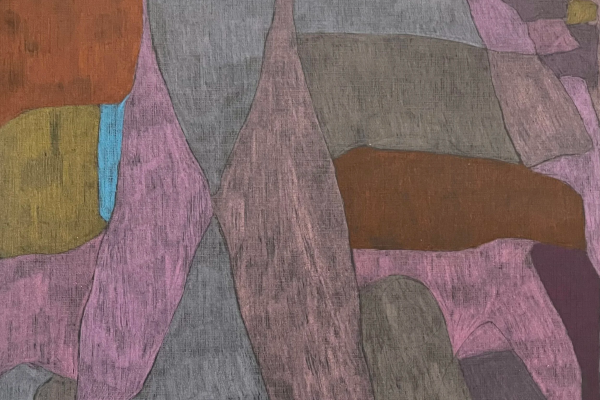
Zachary Schomburg is a poet, painter and novelist. His newest book of poems, Wool Moon, is forthcoming from Black Ocean in the fall of 2026. He is also the author of a novel called Mammother (Featherproof 2017). You can see his paintings at zacharyschomburg.net. He lives in Portland, OR with B and Y.
Short-shorts team leads Jordan Vines and Adam Nesbit interview Zachary Schomburg for Passages North.
Jordan Vines and Adam Nesbit: What are moves/features you enjoy in a prize-winning piece?
Zachary Schomburg: I like a story like I like a room with very little furniture in it. One piece on its side, another upside down, maybe, but there's room to make play, to really make a fool of yourself. I want the reader to have enough room to feel like they have to write a bit of story too. I like a story that plays in the sad parts, where you can feel the maniacal writer sensing danger and going into it. I like it when things happen and aren't explained, raw honesty, terribleness, fear, relief, grief, pettiness. I like so many things, like Julio Cortazar, Lydia Davis, Miranda July, Taeko Kono, Ray Bradbury, Amy Hemple, Ben Marcus, Shirtey Jackson, Mary Ruefle, and Anne Carson's Short Talks. I like it when Born Dancin' smashes the windshield at the end in Donald Barthleme's "The First Thing the Baby Did Wrong." I like not knowing how I feel. I like it when a story makes me feel more like that.
Jordan Vines and Adam Nesbit: How does poetry inform your experience with prose poetry/hybrid work/flash fiction?
Zachary Schomburg: Hmm...I don't know, really. It's really hard for me to tell the difference sometimes. I mean, I don't read poetry for sense, really, but for flashes of something, or just to take up my time, to be with me. I suppose the same can be true for reading short prose. Neither has any responsibilities. I'm not owed anything.
Jordan Vines and Adam Nesbit: If you had to choose between emotional complexity and emotional precision in a piece, which would you value more? Is it possible to balance both?
Zachary Schomburg: I think I'd want to talk more about emotional precision, to get at what it means when we say that. If it means pinpointing an emotion in a piece, nailing down an undeniable interpretation of an experience, cleanly and accurately, then I'm not too interested in that. It'd be like looking at hyperrealism in art. I'm not drawn to it. It hurts me to think someone has spent all that time removing the need to make the art in the first place.
Submit to Passages North’s Neutrino Short-Short Prize on Submittable.